How Far Will the Next One Go? — A First Look at ZOOM NEURIG and Darkglass Anagram
☕ Part of a series on interesting music gear: what to look forward to before trying it, and how to choose.
💡 What you’ll learn
- What to watch for in ZOOM’s new NEURIG: neural modeling and the RIG feature
- What’s inside Darkglass Anagram’s latest guitar version, Guitar Essentials
- How the two compare for guitar and bass, live performance and home recording
When you follow news about new multi-effects units, every so often you find one whose spec sheet sets your imagination running. The two that have caught my attention are ZOOM’s NEURIG and Darkglass Electronics’ Anagram Guitar Essentials. Both put amps and effects in one unit, but they seem to be heading in very different directions.
One thing up front: I haven’t tried either one yet. This isn’t a report on how they feel to play or sound; it’s a look at the specs available so far and the impressions people have already shared about Anagram. Even so, I’m looking forward to trying them and seeing whether they can bring my pedals and amp together, and how much of a home-recording setup they can replace.
ZOOM’s new NEURIG aims to capture the feel of turning an amp’s knobs
ZOOM’s latest multi-effects unit is called NEURIG. It’s a neural amp-and-effects modeler for guitar, scheduled to launch in early November. At the time of writing, it hasn’t been released yet. It’s made for guitar, not bass.
The headline features are ZOOM’s proprietary DNA Engine and support for NAM A2 Lite. Rather than capturing just one amp or effect sound, DNA Engine models how that sound changes as you turn the gain and EQ knobs. The unit comes with 30 DNA models. The idea is that the sound responds to your playing and knob adjustments, which opens up some interesting possibilities for anyone who wants to dial in an amp’s response while recording at home.
Another interesting feature is NAM A2 capture. The plan is to capture a physical piece of gear connected through the send and return, analyze it over Wi-Fi, and then use the resulting model. That feature is scheduled to become available in December, so it won’t be ready as soon as the unit launches. I’ll want to check that the firmware and service are actually available before trying it.
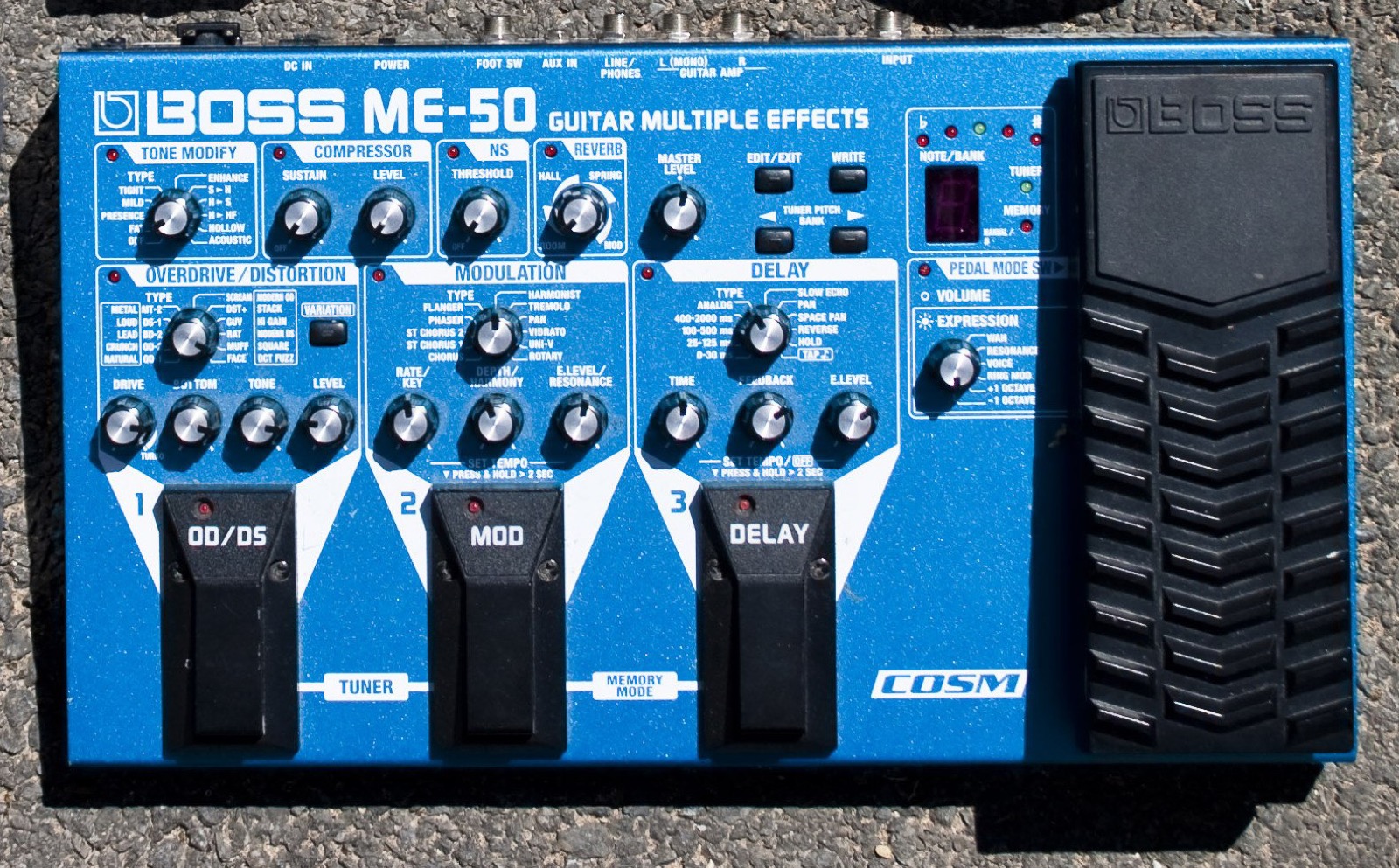
The unit offers 139 effects, 22 multilayer IRs, and storage for up to 50 user IRs. An IR is a recording of a cabinet’s sound; when you record direct without powering an amp, it stands in for the cabinet. The RIG feature lets you assign up to 14 effects and their on/off states to four footswitches, with switching designed to minimize gaps in the sound. You can save up to 200 RIGs and choose from 75 presets. It also has USB audio, a looper, a tuner, and Wi-Fi.
What stands out compared with earlier ZOOM products isn’t simply the larger number of effects. It’s the combination of DNA Engine, NAM A2 Lite, physical gear capture, and four-switch RIG control in one unit. ZOOM’s earlier G Series models also offer a wide range of effects and amp models, but NEURIG has a different design at its core: capture and neural modeling. Touch controls, a lightweight chassis, and a built-in battery rated for up to 4.5 hours could also change how it’s used compared with multi-effects units designed to stay plugged in at home or on a pedalboard.
Since NEURIG hasn’t launched yet, there aren’t hands-on reviews to summarize. Based on the specs, it looks flexible for players who want to explore an amp’s response by adjusting its gain and EQ, or capture their own amps and pedals to take them on the road. Some services, including capture, are planned for a later date, though. I’d want to see whether the 139 effects and feature-rich screen are easy to handle during a live set.
If I were trying it, I’d start with the same amp model and move the gain and EQ controls to see how naturally the DNA model follows those adjustments. Then I’d capture one of my own pieces of gear and compare it with the original, both for feel and for how much work the process takes. I’d also assign clean, rhythm, and lead sounds to the four switches and see whether switching between them while carrying over the reverb works well live.
The latest Darkglass Anagram is the guitar-focused Guitar Essentials
The new model to watch in the Anagram line is the Darkglass Electronics Anagram Guitar Essentials. Built on the bass-focused Anagram, this limited edition adds amps and pedals for guitar. It has a black finish, a dedicated set of guitar presets, and 3D displays modeled on individual amps and pedals. It’s easiest to think of it as a guitar-focused version of the same platform, rather than a successor to the bass Anagram.
The original Anagram has a six-core DSP, 32-bit/48 kHz processing, a seven-inch touchscreen, six encoders, and three footswitches. It includes more than 50 customizable effects, a tuner, and a looper. It can run up to 12 blocks in series or 24 in parallel. It can load NAM models and IRs, and offers USB audio, MIDI, Bluetooth, and other connections. That should make it easy to fit into either a live pedalboard or a home-recording setup.
Guitar Essentials adds amp models aimed at everything from American-style cleans to British crunch and high gain, along with pedal models such as overdrive. Some amp names suggest the clean sounds of a Twin or Deluxe, the rock tones of a JCM800, or the high gain of a 5150. These aren’t the original products themselves; the model names avoid using those product names for rights reasons. They’re best treated as clues to the sounds they’re aiming for.
Reviews of Anagram often praise its range of tones, connectivity, on-screen controls, and ability to cover practice, recording, and live performance. For the bass version, reviewers point to the convenience of putting an amp, cabinet, distortion, and time-based effects in one unit, as well as the flexibility to arrange the signal path. Reviews of Guitar Essentials also point to the guitar amp and distortion sounds, and the potential to expand it later with NAM support.
One concern is that, if you compare only the number of amps and effects available out of the box, some players may find fewer choices than on competing products. The screen and range of features are appealing, but it may take some practice to make detailed edits quickly on a pedalboard. It can run on 9V power, but requires at least 1.7A. If you use a typical compact pedal power supply, check whether it can provide enough current.
If I got to try it, I’d first see how easily I could choose guitar amps and pedals, and whether the 3D display makes that process clearer. Then I’d switch between NAM models and the built-in models and try the full flow from building presets to recording. I’m also curious how Darkglass, a brand strongly associated with bass gear, has brought together the classic clean and overdriven guitar sounds.
The bass version of Darkglass Anagram is a workstation that brings together preamps, effects, and amp models tuned for low frequencies. Bass players often praise it not just for Darkglass-style distortion, but also for letting them cover a wide range of sounds, from clean to heavily processed, with one unit. The guitar version aims to extend those strengths with a selection of guitar amps and pedal models.
If guitar is your focus, look at NEURIG; if bass is, Anagram stands out
Both units are multi-effects processors suited to home recording and live use, but they start from different places. NEURIG is designed for guitar, with DNA Engine, capture, and switching through four footswitches at the forefront. It’s aimed at players who want to model guitar amps and pedals and bring them together in one unit. Since it hasn’t launched yet, it’s worth checking which features will be available right away and when the later services will be ready.
Anagram began as a bass-focused platform. The bass version looks like a good fit for players who want to bring their low-end sound into one unit. Guitar Essentials adds guitar sounds to the established bass-focused model, letting you use the same hardware for guitar as well. It’s also an interesting option for players who work with both bass and guitar, or home recordists who want to load NAM models and tailor the sound to their own setup.
For live use, the points to compare are NEURIG’s RIG switching assigned to four footswitches, and Anagram’s combination of three footswitches, a touchscreen, and external MIDI. Both offer appealing features for home recording, including USB audio and cabinet-related tools. NEURIG centers on DNA models and NAM capture planned for a later date; Anagram centers on NAM and IR support, plus signal paths with many blocks. Which one works better depends on the features you need and how each feels to use.
I haven’t tried either one yet, which leaves me with plenty to check once I get my hands on them. Even just looking over the specs gets me wondering: can a pedal respond like an amp when you turn its knobs, and how much of the familiar guitar and bass sounds can each unit deliver? Once I’ve tried them, I’ll write about the controls and the process of shaping a sound, too.
Photo credits
- Header image, “Guitar Effects by roomiccube.jpg” — Shane Gavin (cropped) / Wikimedia Commons / CC BY 2.0
- “Boss ME-50 Multi Effects Pedal.jpg” — Shane Gavin / Wikimedia Commons / CC BY 2.0
- “Peavey head & Ampeg Classic cabinet.jpg” — Roadside Guitars / Wikimedia Commons / CC BY-SA 2.0
Licenses:
CC BY 2.0: https://creativecommons.org/licenses/by/2.0/
CC BY-SA 2.0: https://creativecommons.org/licenses/by-sa/2.0/